
Insight
Meta Wants AI to Make and Run Your Facebook and Instagram Ads. Should You Let It?
Meta is close to its goal of AI-made, AI-run ads. What's actually available now, what the independent data says, and how small businesses can use it without losing control.
The short version
- Meta (Facebook and Instagram) set itself a goal of letting businesses create a whole ad from just a product photo and a budget by the end of 2026. Many of the pieces are now live or being tested.
- In September, Meta launched an AI assistant for small businesses that can draft posts and ad campaigns for you to approve. In October, it made turning photos into video ads available to all advertisers.
- Making ads is now easy. Making ads that profit is still the hard part: independent tests show automated campaigns can look better in Meta's reports than they really are.
- Use the tools, but keep a human in charge of the offer, the approvals and the measurement.
What's happening
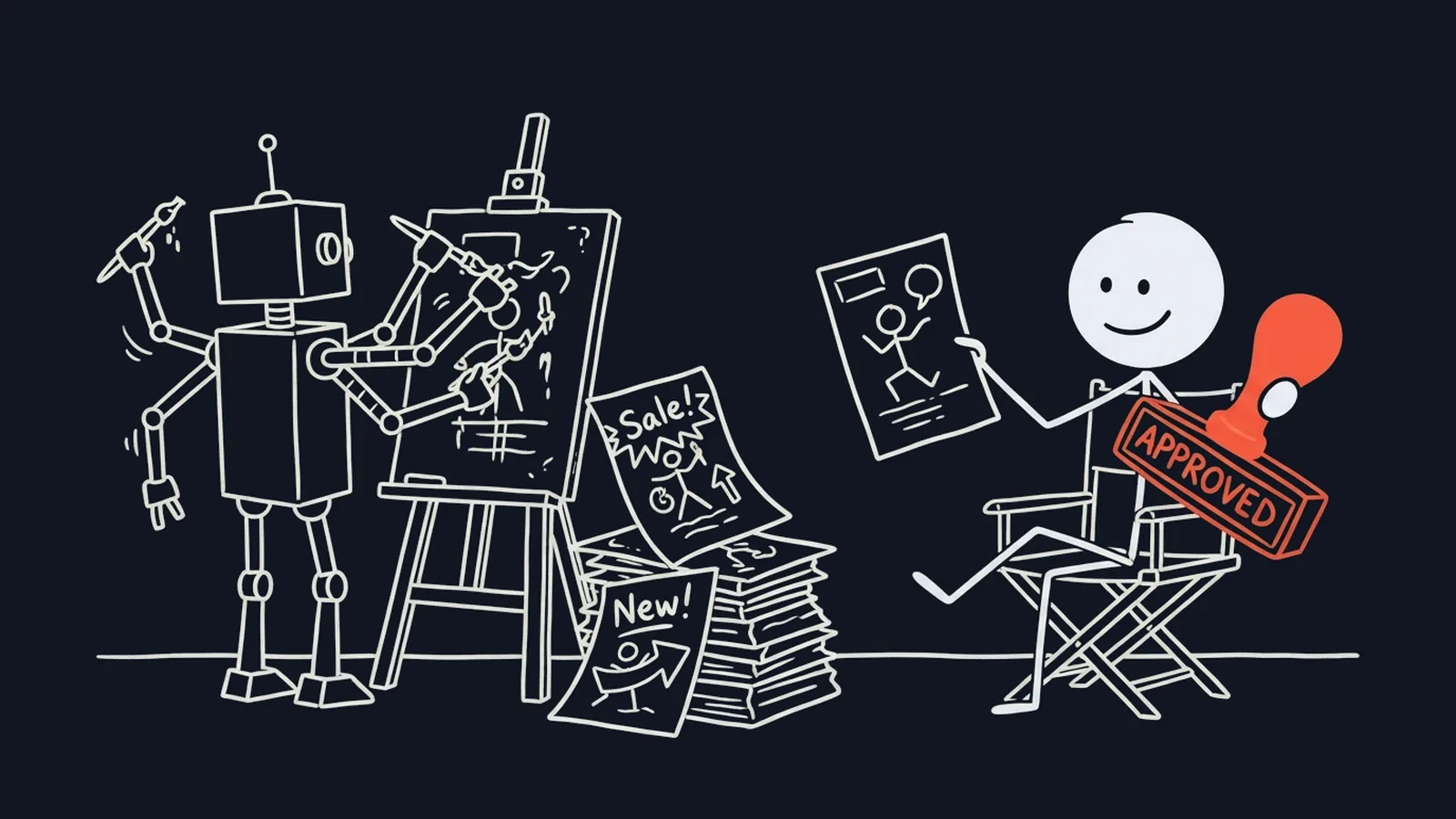
In mid-2025, the Wall Street Journal reported that Meta wanted to fully automate advertising by the end of 2026. The idea: a business uploads a product image or website address, sets a budget, and Meta's AI creates the images, video and text, then decides who sees the ad.
We're now in the final stretch of 2026. So where does that stand?
Automation is already the default. Meta's AI system, called Advantage+, is now the standard way to run Meta ads rather than an optional extra. And according to Meta's own figures, more than 9 million small businesses had already used at least one of its AI tools for creating ads.
New tools announced in October. At Advertising Week in New York on October 6, Meta announced a batch of AI features. Agencies that sorted them by status found a mix:
- Available now: turning your existing photos into video ads, and a setting that helps stop "new customer" campaigns from showing ads to people who already bought from you.
- Being tested: an AI assistant inside Ads Manager that can set up campaigns and change targeting and budgets through a conversation, with your approval. Also, letting people buy directly inside chats with Meta's AI.
- Coming by year-end: describing your ideal customer in plain language and letting the AI find the matching audience.
Meta's reason for the video push: it says more than 60% of the time people spend on Facebook and Instagram is spent watching video.
An AI "employee" for small businesses. On September 29, Meta launched Muse for Small Business, a version of its Muse AI agent that connects to tools like Shopify, QuickBooks, Stripe and Canva, as well as your Facebook Page, Instagram account and Meta ad account. Meta says it can analyze your sales and social data, draft a week of posts, and put together a new ad campaign for you to review.
Meta says publishing, sending messages and spending money all require your approval. Muse is free for most uses, with paid plans for heavier use. Note that Muse launched first in the US and Canada, so check whether it's available where you are.
What people are saying
"The promised numbers come from Meta"
Meta says advertisers who adopt its AI assistant's recommendations typically see 5% more conversions at the same cost. Marketing agency Relevant Audience pointed out that Meta hasn't published how it measured that, so it's best treated as a claim to test, not a forecast.
"Automation is fast, but it can fade"
The most useful independent evidence comes from Haus, a company that runs controlled experiments measuring whether ads actually cause extra sales. It analyzed 640 Meta experiments.
The results were nuanced. Advantage+ campaigns did about 9% better than manually managed campaigns at the halfway point of a test, but finished about 12% worse on true return on ad spend once the longer-term effects were counted. Overall, 58% of brands got better real returns from their manual campaigns.
Haus still describes Advantage+ as valuable, particularly for short promotions and busy seasons when it can find ready-to-buy customers quickly. And one important caveat: the average advertiser in that study spent around $14 million a year on Meta, so small businesses should treat it as a direction of travel, not a precise prediction.
"Small businesses could be the big winners"
When the full-automation plan was first reported, coverage pointed out that it could matter most to small and midsized businesses, which often don't have designers, video teams or big ad budgets. Some larger brands, meanwhile, worried about losing creative control and authenticity.
What this means for your business
Here's our take.
1. Producing ads is no longer the bottleneck. When every business can generate polished videos from a few photos, polished stops being special. What makes your ads stand out is what the AI can't invent: a genuinely good offer, real customer stories, real photos of your work, and a clear reason to choose you.
2. Meta's dashboard isn't the whole truth. Automated campaigns are very good at finding people who were about to buy anyway. That can make the numbers in Ads Manager look great while adding fewer new sales than you'd think. Compare what Meta reports with what actually shows up in your bank account and sales records.
3. Keep a human in the approval loop. AI can write a headline that promises a discount you don't offer, or create a video that doesn't look like your brand. The approval steps Meta built in only protect you if someone actually reviews what's going out.
4. The ad is only half the sale. AI can send more people to your website, but it can't fix a slow, confusing page or a clunky checkout. If your landing page doesn't convert, cheaper clicks just mean cheaper disappointment.
What to do this month
- Test, don't switch everything. Try the new photo-to-video feature on one campaign using your best-performing images, and compare it with what you're running now.
- Feed the AI real material. Upload genuine product photos, short customer videos, reviews and a clear offer. The better your inputs, the better what comes out.
- Review every AI-generated ad before it runs. Check prices, promises, spelling and whether it sounds like you.
- Stop paying to "find" existing customers. Use the new customer-exclusion settings in campaigns meant to win new buyers.
- Check your tracking. Make sure the Meta Pixel and Conversions API record real purchases and leads, not just page views.
- Measure outside Meta. Every month, compare the sales Meta claims with your own sales records. If you can, briefly pause ads in one area or for one week and see what really changes.
- Go slowly with AI agents. If you try Muse, start with analysis and drafting tasks, keep approvals switched on, and think carefully before connecting your payment or accounting tools.
Want a second opinion on your Meta ads?
We'll do a free Meta ads review: we check whether your tracking is accurate, which AI features are switched on, whether you're paying to reach existing customers, and how Meta's reported results compare with your real sales. You'll get a plain-English summary and a short action list.
Sources
- Campaign Asia: Meta aims to fully automate ad creation with AI by 2026 (WSJ report)
- Hawky: Meta Ads updates 2026: every major change
- Relevant Audience: Meta's Advertising Week 2026 ad tools: what is live, in test or coming
- Adsuploader: Meta Ads updates (October 2026)
- TechCrunch: Meta is expanding its AI agent Muse to small businesses
- Fox Business: Meta puts popular new tool in hands of small businesses
- Coverager: Meta expands Muse to small businesses
- Yahoo Finance: Meta expands Muse for small businesses: will ad growth accelerate?
- Haus: The Meta Report: lessons from 640 Haus incrementality experiments
- MediaCat UK: Marketers best Meta's black box, report shows