
Insight
Google's New Shopping Cart Works Across Many Stores. Can Shoppers Buy From Yours?
Google's Universal Cart launched in the US in October 2026. Here's what changed, which stores can take part, and how to get your shop ready.
The short version
- On October 15, 2026, Google rolled out "Universal Cart" in the US: one shopping cart that holds products from many stores, across Google Search, AI Mode and the Gemini app.
- Shoppers can get price-drop and back-in-stock alerts, and pay with Google Pay without visiting each store's site, or send the cart to the store's own checkout.
- Earlier in October, Google opened a Merchant Center hub where stores choose how they take part. Shopify stores were switched on by default in September.
- It's US-only for now. Canada and Australia are expected in 2027, and YouTube and Gmail aren't included yet.
- Whether shoppers can buy from you this way depends heavily on your product data and your website setup.
What's happening
Last month we wrote about AI shopping agents and Google's Universal Commerce Protocol (UCP), the shared technical standard that lets AI tools check out on a store's behalf. Since then, things have moved from plans to a product.
Here's what changed, based on reporting from PPC Land, Retail Dive and others:
- September 2026: PPC Land reported that Shopify merchants were matched to their Google Merchant Center accounts and switched on for checkout inside Google by default, with notice emails sent around September 22. Merchants who didn't want this had to opt out themselves.
- October 6, 2026: A new section of Google Merchant Center (the free tool where stores upload their product information to Google) went live. Stores choose how to take part: send shoppers' carts to their own site, let shoppers check out directly on Google, or link customer accounts. Google still decides which merchants it brings on board.
- October 15, 2026: Universal Cart rolled out in the US across Google Search, including AI Mode, and the Gemini app.
- October 26, 2026: Google's Merchant API (the technical connection larger stores use to send product data) added early-stage reporting on how products perform in these AI checkouts, according to Search Engine Roundtable.
What shoppers get. One cart that follows them across Search and Gemini. Google watches the items in the background and alerts shoppers to price drops and restocks. It can also surface promo codes and suggest which card in their Google Wallet gives the best perks. At checkout, they pay with Google Pay in a few taps, or move items to the store's own cart.
What stores keep. Google says the store stays the official seller, sending its own order confirmations and handling customer support.
Who's in. Google has named big brands such as Nike, Sephora, Target, Walmart and Wayfair, plus Shopify stores. Google hasn't published how many merchants take part. Requirements PPC Land found in Google's help pages include specific product data settings, a payment provider that accepts Google Pay, and for cart transfer, a newer version of UCP set up on the store's website.
Where. US only. PPC Land reports Canada and Australia moved to 2027. YouTube and Gmail, which Google mentioned in May, weren't part of the October launch.
What people are saying
What Google isn't saying
PPC Land's Luis Rijo listed what Google hasn't disclosed: merchant fees, how products are ranked or placed, where promo codes come from, what data stores get back and how sales are credited. He also noted Google published no usage numbers with the launch.
Who owns the customer?
In Retail Dive, Wharton professor Kartik Hosanagar argued that whoever controls shopping agents now holds the power. Retail Dive also reported expert warnings that a middleman like Google could weaken stores' direct relationship with their customers and their data.
Very few stores are technically ready
PPC Land cited an Originality.ai scan from May 2026 that found only 26 detectable UCP setups across more than three million websites. That number is likely higher now, especially with Shopify's default switch-on, but it shows how early this is.
Vendors say "get your data right"
Commerce platform VTEX urged stores to make sure prices, stock levels and product details update in real time. VTEX also claimed several big retailers were live at launch and that the cart flags compatibility problems; other coverage didn't confirm those details, so treat them with caution.
Watch
For a quick look at the launch, see Universal Cart Has Arrived (YouTube).
What this means for your business
Here's our take.
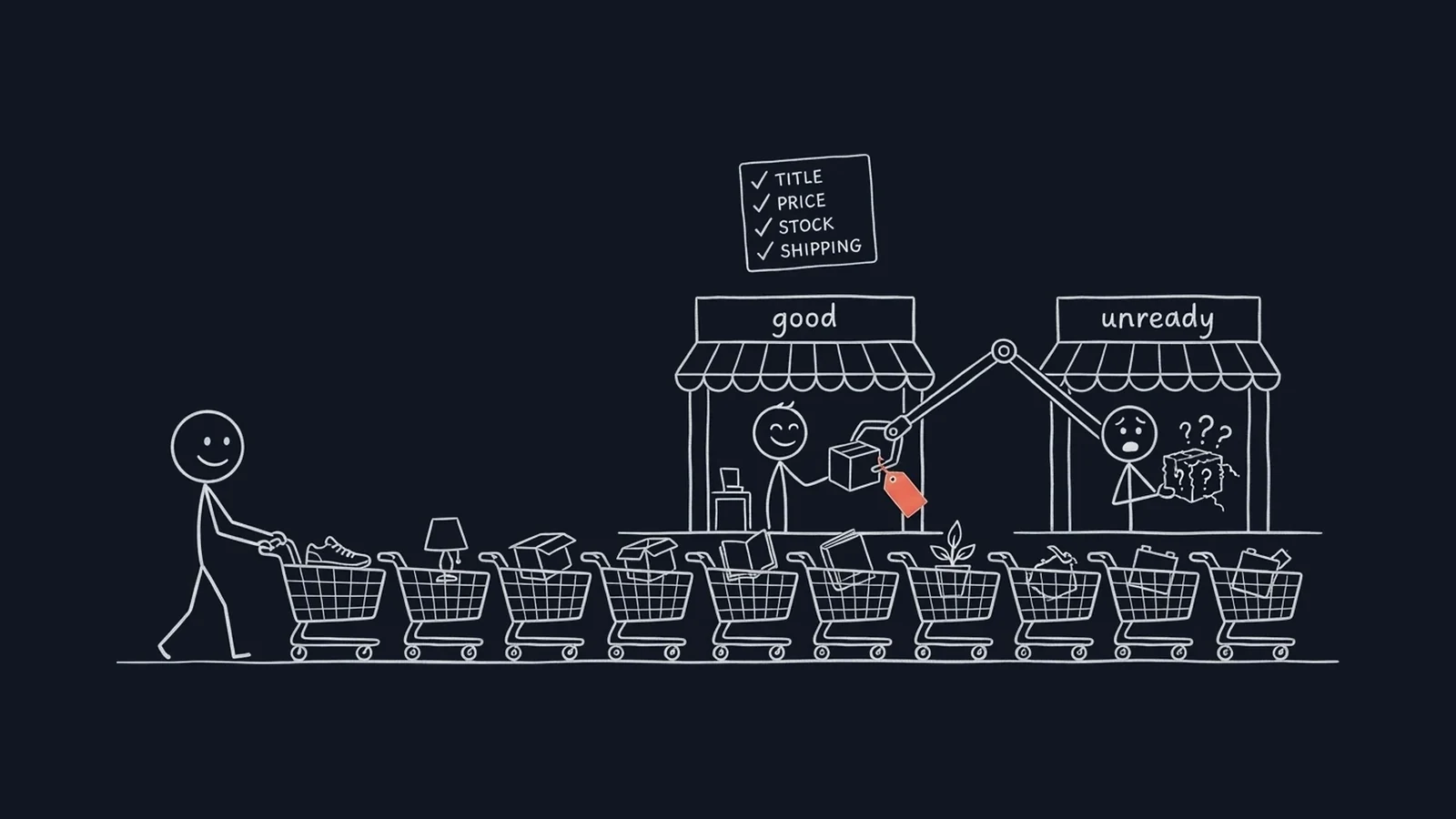
1. Your product data is now your shop window. In AI shopping, shoppers may never see your homepage design. What they see is your product title, price, photos, stock status and shipping details as Google understands them. If that data is messy, you're invisible or, worse, wrong.
2. Shopify stores should check what's already switched on. If you're on Shopify and connected to Google, you may already be enabled for checkout inside Google. That isn't necessarily bad, but you should know about it and decide on purpose.
3. Price and stock accuracy matters more than ever. Google's cart watches prices and stock in the background. If your website says one price and your feed says another, shoppers lose trust and Google may stop showing your products.
4. Weigh convenience against relationship. Checkout on Google may bring more sales with less effort. But you may get fewer people on your site, signing up for emails or browsing other products. A "send to my cart" setup keeps more of the relationship; native Google checkout may convert better. Many stores will want a mix.
5. Outside the US, prepare now and switch on later. If you sell internationally, this isn't available to your shoppers yet. Cleaning up your product data now costs little and puts you ahead when it arrives.
What to do this month
- Log in to Google Merchant Center. Check for any errors on your products and look for the new section on agentic checkout options.
- If you use Shopify, review your Google settings. Confirm whether checkout on Google is switched on, and decide whether you want it.
- Fix your product basics. Clear titles, accurate prices, real photos, correct stock and shipping costs for every product, especially your best sellers.
- Make sure prices match everywhere. Your website, your Google product feed and any sale prices should always agree.
- Check your returns and support info. You're still the seller, so make sure your policy pages and contact details are clear.
- Ask your developer about UCP. If you're not on Shopify, ask whether your platform supports it and what it would take to set up.
Is your online store ready for AI shoppers?
We'll check your product feed, Merchant Center setup and store checkout, and tell you in plain English what's stopping Google's AI shopping tools from showing or selling your products. It's a free ecommerce readiness check, with a short action list.
Request your free ecommerce readiness check.
Sources
- PPC Land: Google's Universal Cart reaches US Search and Gemini, but not YouTube
- Google: Introducing the Universal Cart and more ways to help you shop
- Google: Let AI do the hard parts of your holiday shopping
- Retail Dive: Google launches cross-retailer Universal Cart
- VTEX: Google's Universal Cart Wants to Own Checkout. Is Your Commerce Stack Ready?
- Search Engine Roundtable: Google Merchant API With New October 2026 Updates
- Sanbi.ai: Agentic Commerce in Q4 2026: Which AI Assistants Can Actually Check Out